


Last Updated: November 4, 2026
Quick Summary
To shop for clothes online and get the fit right, measure your waist, hip, inseam and rise, then compare those numbers to the brand's size chart and garment measurements instead of trusting the size label. Read fit notes, fabric composition and care instructions before you add to cart.
- Measure a garment you already love flat and compare it to the product page size chart.
- Size up for woven fabrics and structured cuts, and size down for stretch fabrics.
- Look for four-way stretch with a small spandex content for all-day pants.
- Try the garment on within ten minutes of opening the parcel with the tags on.
- Dream Pants offers free shipping on orders $95+ in Canada and the USA with 30-day postage paid returns.
Table of Contents
- Start With Your Own Tape Measure, Not the Size Label
- How to Buy Clothes Online That Fit: Read the Size Chart and Fit Notes
- Check Fabric, Stretch and Construction Before You Add to Cart
- Where Can I Buy Good Quality Clothes Online Without Guesswork
- Is There a Best App to Buy Clothes Online?
- Work Out the Real Cost of a Return Before You Order
- What to Do in the First Ten Minutes After the Parcel Arrives
- Shop the New Season at Dream Pants
- Frequently Asked Questions
Start With Your Own Tape Measure, Not the Size Label
Learning how to shop for clothes online starts with one habit: trust your tape measure more than the number on the tag.
Size labels are not a standard. A "medium" from one Canadian brand can fit like a "large" from another. So measure your body, then measure a garment you already love. That pair of numbers is your real size guide.
The Four Measurements That Decide Most Purchases
You need four numbers for pants and skirts:
- Waist: measure around the narrowest part of your middle, not where your jeans sit.
- Hip: measure around the fullest part of your seat, feet together.
- Inseam: measure from the crotch seam to the hem on pants that fit you well.
Save these in a note on your phone. You will use them every time you shop for clothes online.
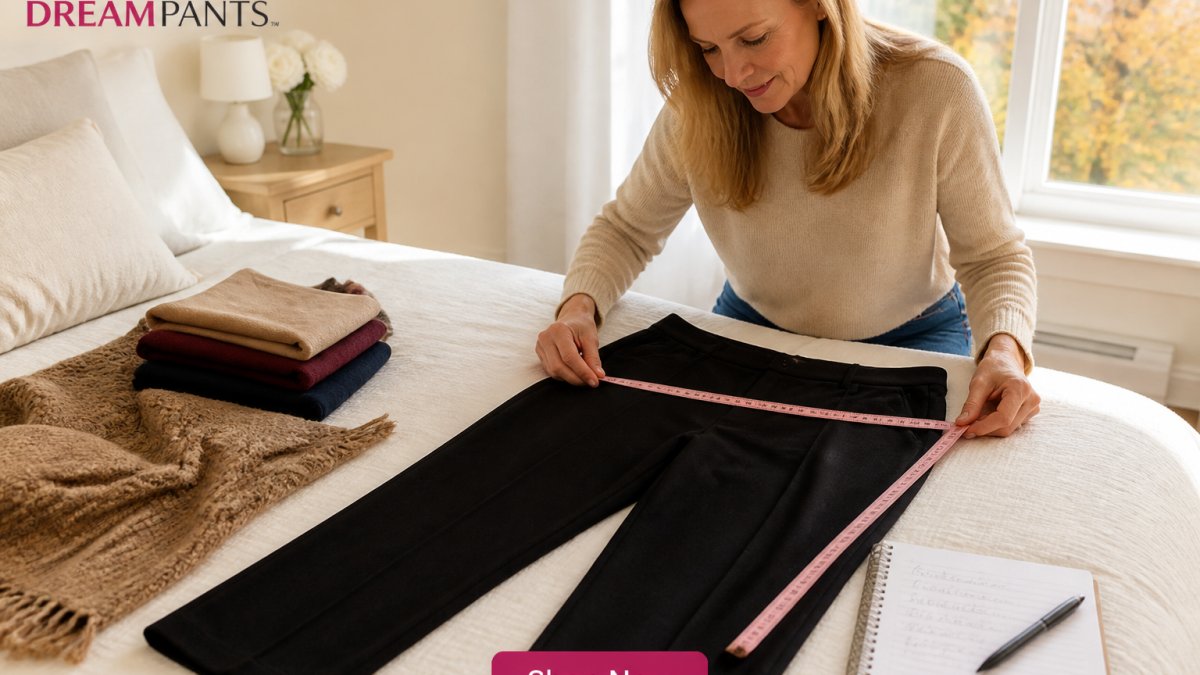
Measure a Garment You Already Love
Lay your best-fitting pants flat. Measure straight across the waistband and double it, measure the hip the same way, and measure the inseam down the inside leg.
Compare those numbers to the size chart on the product page. If they match within a centimetre or two, you have found your size, this one step removes most of the guesswork from buying clothes online that fit.
Here are the four measurements to save on your phone before you shop for clothes online.
| Measurement | Where to measure |
|---|---|
| Waist | Around the narrowest part of your middle |
| Hip | Around the fullest part of your seat, feet together |
| Inseam | From the crotch seam to the hem on pants that fit |
| Rise | From the crotch seam up to the top of the waistband |
How to Buy Clothes Online That Fit: Read the Size Chart and Fit Notes
The size chart is the most-skipped tool on any clothing site. Read it first, then the fit notes.
Fit notes tell you how a garment behaves. "Relaxed," "slim," "fitted," and "roomy" mean different things at different brands, a relaxed leg on one label can feel like a straight leg on another.
Here is what to check, in order:
- Size chart: compare your body measurements to the brand's numbers, not to your usual size.
- Garment measurements: the flat-lay numbers, if the page lists them.
- Model measurements: note the model's height and the size she wears. If she is 5'9" in a small, a small on a 5'4" frame will sit differently.
- Fit notes: read the description for cut, rise, and leg shape.
- Between sizes? Size up for woven fabrics and structured cuts. Size down for stretch fabrics that relax with wear.
That last point matters. Sizing down in stretch fabric hoping for a tighter look backfires: stretch relaxes through the day and you end up baggy by lunchtime.
Check Fabric, Stretch and Construction Before You Add to Cart
Fabric decides how a garment fits after a month, not just on day one. Two pairs of pants can share a size chart and behave completely differently because of fiber content, weight, stretch, lining, and construction. Read the composition and construction notes before you add to cart.
How Fiber Content Changes Fit and Feel
Fiber content is the first thing to check, because it tells you how the garment will move, drape, and age.
- Cotton is breathable and holds a crisp line, but wrinkles and can shrink unless pre-shrunk or blended. Woven cotton gives little, so waist and hip fit matters more.
- Polyester resists wrinkles and holds color, often blended with spandex for stretch pants. It can feel warm, so check for breathable or brushed descriptions.
- Viscose and rayon drape softly and feel cool, but stretch out at the knee and seat and need gentler care.
Stretch fabrics relax with body heat and movement, so sizing down for a tighter look often backfires. If you are between sizes in stretch, take the larger size and let the stretch do the work.
Weight, Drape, and Opacity
- Lightweight fabrics drape closely and can be semi-sheer. Check whether the description mentions lining; unlined light pants may show seams and pockets.
- Midweight fabrics are the most forgiving, they hold a line without standing away from the body and usually need less lining.
- Heavyweight fabrics stand away from the body and can feel stiff at first, but hold their shape longest.
Drape follows weight and fiber together. For a clean straight line, look for a midweight woven with a bit of spandex; for a fluid, dressy look, expect lighter fabrics and check for lining.
Stretch, Recovery, and the Two-Way Test
Stretch is not just about how far a fabric gives, it is about whether it recovers. Good recovery snaps back after you sit and stand; poor recovery stays stretched at the knee and seat.
On any product page, look for "holds its shape," "recovery," or "four-way stretch." Two-way stretch gives in one direction, four-way in both. For all-day pants, four-way stretch with a small spandex content is usually safer.
Construction Details That Predict Fit
Construction is where photos and descriptions earn their keep. Look for these details before you order:
- Waistband: a lined or contoured waistband sits flatter and resists rolling. An elastic-back or pull-on waistband gives more comfort but less structure.
- Seams: clean, flat seams lie smooth against the body. Bulky seams can show through lightweight fabrics.
- Lining: lined pants hang cleaner and are less likely to show through. Unlined lightweight pants may need a slip or specific underwear.
Care Instructions Are Part of the Fit Decision
Care instructions tell you how the garment behaves after the first wash. Hand wash cold and lay flat to dry keeps stretch fabrics in shape far longer than machine drying.
Skipping the care label is the fastest way to shrink a good pair of pants. Check it before you order, not after.
If you want to see how stretch fabric and construction notes are described in detail, browse the Dream Pants Premium Ponte collection where fabric and construction notes sit beside each style.
Where Can I Buy Good Quality Clothes Online Without Guesswork
The best place to buy good quality clothes online is a retailer that shows real garment details, states its return terms clearly, and carries brands with consistent sizing. Those three things remove most of the risk.
Look for these signals on any clothing site:
- Full fabric composition listed on every product page
- Model height and size shown in the photos
- Customer reviews that mention fit, not just style
Dream Pants carries premium Canadian brands such as Lisette L, Sympli, Joseph Ribkoff, Frank Lyman, French Dressing Jeans, Dolcezza, and Alison Sheri. One customer shared: "I can always order the exact size from my last order and am confident that they will fit."
Is There a Best App to Buy Clothes Online?
There is no single best app to buy clothes online. The best app is tied to a retailer whose sizing you already trust, with a return policy you have read and product details that match the website.
Instead of hunting for a universal best app, use a short evaluation workflow. It takes about five minutes and tells you whether an app is worth keeping.
A Five-Minute App Evaluation Workflow
- Compare the product page to the website. Open the same item in the app and mobile browser. Fabric composition, garment measurements, model height and size, and care notes should match. If the app hides details the website shows, it is a downgrade.
- Check the size chart inside the app. A chart you cannot zoom is a warning sign, you should be able to read the numbers and compare them with your measurements.
- Look for fit feedback. Reviews that mention fit, "runs small," "true to size," "long in the inseam", beat star ratings alone. If the app strips reviews, you lose your best fit signal.
- Confirm the return policy in the app. The return window, who pays postage, and whether returns can be started in the app should match the website.
- Check whether it remembers your measurements and past orders. An app that stores your four numbers and order history saves time and reduces re-order mistakes.
What Apps Are Good For, and What They Are Not
Apps are convenient for reordering a size you already know, tracking a parcel, and starting a return. They are weaker for first-time purchases from an unfamiliar brand, because the small screen encourages skimming the details that decide fit.
Privacy and Payment Basics
Before you save a card in any shopping app, check that checkout uses a secure, encrypted connection and that the app does not ask for permissions it does not need.
An app that pressures you with countdown timers and pop-up discounts is often rushing you past the size chart. Close the pop-up, read the fit notes, then decide.
If you have found a retailer whose sizing works for you, their app or mobile site may suit you well, loyalty beats novelty here.
Work Out the Real Cost of a Return Before You Order
A return can cost more than the shipping label. Work out the full cost before you check out.
Add up these pieces:
- Shipping cost to you
- Return postage, if you pay it
- Duties and taxes on cross-border orders
Compare that to the price of the item. If the total risk is high, order one piece first, not three.
This is where a clear policy changes the math.
If you cannot find the return terms in under a minute, treat the purchase as final sale and shop somewhere else.
What to Do in the First Ten Minutes After the Parcel Arrives
Try the garment on within ten minutes of opening the parcel, with the tags on and the packaging kept. This protects your return window and your options.
Run through this checklist:
- Try it on with the shoes and top you plan to wear it with
- Sit down, walk, and raise your arms to test the fit
- Check the seams, hem, and waistband in a mirror
If it fits, wash it per the care label and enjoy it. If it does not, start the return the same day.
Cutting off tags before a proper try-on turns a returnable item into a keeper. Leave them on until you are sure.
Shop the New Season at Dream Pants
The current season calls for pieces that layer well and suit the way you live. Start with the fit basics above, then build your wardrobe around them.
Here is how we would approach it:
- Measure once, and keep your four numbers on your phone.
- Read the size chart and fit notes on every product page.
- Check fabric and care before you add to cart.
Ready to put it into practice? Browse the full Dream Pants collection to shop current styles, or go straight to the cuts that suit your measurements: capris and crops for a shorter leg, slim ankle for a tapered line, and straight leg for a classic drape.
Our team is here if you want help with sizing before you order.
Frequently Asked Questions
What should you check before ordering clothes online?
Check four things before you pay: the garment measurements in the size chart, the fabric composition and stretch, the fit notes or model measurements, and the return window. A Sympli top in 94% polyester and 6% spandex, for example, moves very differently from a woven satin blouse, so the same labelled size can behave nothing alike. Add the shipping cost and return terms to that list, then decide.
How do you choose the right size when you shop for clothes online?
Measure your bust, waist, hip and inseam with a soft tape, then compare those numbers to the garment measurements rather than to the size label alone. If you fall between sizes, pick based on fabric: stretch fabrics generally give more than woven fabrics. Keep a note of the size you order from each brand so repeat orders stay consistent.
How can you tell if online clothing is good quality?
Look at the fabric composition, the construction details and the care instructions. A garment listing that names its fibre content, shows close-up photos of seams and cuffs, and states whether it is made in Canada gives you something to judge. Reviews that mention how a piece held up after several washes tell you more than star ratings alone. Vague listings with no fabric details are the ones to skip.
What is the 3-3-3 rule for clothes?
The 3-3-3 rule is a wardrobe filter: keep pieces you can wear three ways, in three settings, for three seasons. Applied to online shopping, it means asking before checkout whether a garment works with at least three things you already own. If you cannot picture three outfits, the item usually becomes a return. It is a useful check against buying sale pieces that never leave the wardrobe.
Shopping for clothes online gets easier the moment you stop trusting the size label and start trusting your tape measure. Dream Pants makes that easier with consistent sizing across premium Canadian brands, free shipping on orders over $95 in Canada and the USA, and 30-day postage paid returns so a wrong guess never costs you. Get started with Dream Pants and build a wardrobe where every piece fits the first time.
SHOP NOW


Laissez un commentaire